


Description
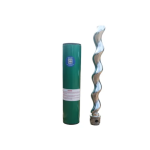
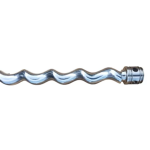
Overview of the rotor and stator components, which are essential in various fluid handling applications.
The rotor is typically a helical or screw-shaped metallic component designed to rotate within the stator. Its primary function is to create cavities that facilitate the movement of fluid from the inlet to the outlet. Rotors are usually constructed from durable materials such as steel or other robust metals. An important feature of the rotor is its eccentric design, which is crucial for forming sealed cavities that ensure efficient fluid transport. Additionally, rotors are engineered to be more durable than stators, often outlasting multiple stators in environments where the fluid does not contain abrasive particles.
On the other hand, the stator is a stationary component that is typically made from elastomeric materials. It features an internal cavity that matches the shape of the rotor, providing the necessary sealing to direct fluid flow. The stator, in conjunction with the rotor, forms the cavities that transport the fluid effectively. Common materials used for stators include various elastomers such as NBR nitrile, Hypalon , Silicon , Natural , EPDM, and Viton which offer flexibility and facilitate the creation of complex internal shapes.
In summary, both the rotor and stator play critical roles in fluid movement, with each component designed to fulfill specific functions and made from materials suited to their operational demands.
Rotor – Alloy Steel ,SS 304 , SS 316 , Monel & Haste Alloy